How to Choose Stage Lighting Without Wasting Money
Walk into any lighting shop, and the specs read like a foreign language. Lux, CRI, DMX channels, beam angles. It's enough to make anyone freeze.
That confusion leads to costly mistakes. People buy lights too dim for the room or too complex to program. Learning how to choose stage lighting the right way prevents both.
By the end of this guide, you'll understand the key specs, the main fixture types, and how to match them to your space. No hype, just the knowledge you need to buy once and buy well.
Why Choosing the Wrong Lights Hurts
A dim rig disappears in a large room. A harsh one flattens skin tones on camera. Both problems trace back to specs people ignore.
Buying blind wastes money. You either overspend on power you'll never use or underspend and replace everything later.
The fix is simple. Understand a handful of terms, and every product page suddenly makes sense.
The Core Specs, Explained Simply
You don't need an engineering degree. You need five ideas.
Lux and Lumens (Brightness)
Lumens measure total light output. Lux measures how bright the light is on a surface.
Bigger rooms and fog demand higher output. A weak beam vanishes under house lights or daylight.
CRI (Color Accuracy)
CRI shows how true colors look under a light. A score of 90+ keeps skin tones and fabrics natural.
This matters most for weddings, video, and theater. Fixtures like the Betopper LPC1818 include a High CRI mode for exactly this reason.
DMX (Control)
DMX is the industry standard for controlling fixtures. It lets you program cues and sync many lights together.
One controller can run your whole rig in perfect time. Every serious setup relies on it.
Beam Angle (Coverage)
Beam angle decides how wide or tight your light spreads. Narrow angles create sharp shafts. Wide-angle lenses flood large areas.
Zoom (Flexibility)
Zoom lets one fixture shift between narrow and wide on demand. That flexibility saves you from buying separate lights for each look.
Fixture Types, Broken Down
Each light type solves a different problem. Mixing them builds a complete show.
Beam Lights
Beam fixtures throw tight, intense shafts. They cut through haze and create that concert-style aerial look.
The Betopper CLB260-O is a strong example. Its 260W output and ultra-tight beam suit clubs and mid-size venues.
Wash Lights
Wash lights flood a stage with smooth, even color. They set mood and cover wide areas gently.
The Betopper LM1915 pairs a 19×15W wash with zoom control. That range makes it flexible across small and medium rooms.
Hybrid Lights
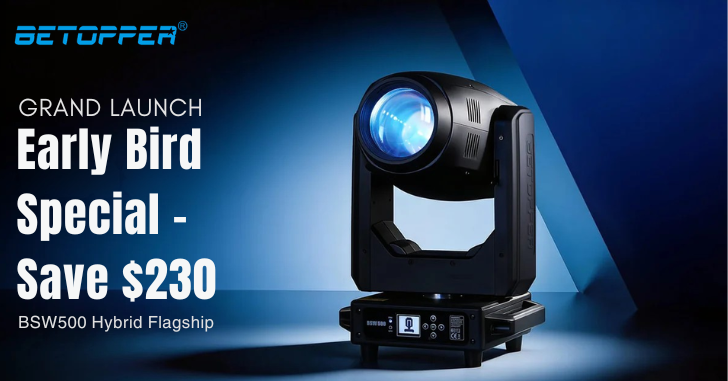
Hybrids merge beam and wash into one body. The Betopper BSW200 adds motorized zoom and focus, so a single fixture handles multiple jobs.
Fewer fixtures mean lighter loads and simpler setups. That's ideal for mobile work.
PAR Lights
PAR lights are your color foundation. Affordable and reliable, they wash backdrops and fill gaps between moving heads.
Strobe and Effect Lights
Strobes add punch and drama during peaks. Matrix effect fixtures layer patterns that lift energy fast.
Pixel Mapping (Bonus Concept)
Pixel mapping controls individual LEDs within one fixture. This creates chases, patterns, and dynamic visuals from a single light.

Buy Now
How to Match Lights to Your Venue
Now let's connect specs to real spaces.
Small rooms and mobile gigs. Prioritize lightweight washes and PARs. You want quick setup over raw power.
Churches and theaters. Focus on High CRI and quiet operation. Accurate color and silent fans matter for worship and drama.
Clubs and bars. Brightness rules here. Beams and strobes create the high-energy feel crowds expect.
Multi-purpose venues. A hybrid flexes across event types. One BSW200 can shift from wedding wash to club beam.
Common Mistakes to Avoid
Learn from the errors others often make.
- Buying on price alone. Cheap fixtures fail mid-event and cost more long-term.
- Ignoring weight. Mobile setups suffer under heavy rigs.
- Skipping DMX. Without it, you lose sync and control.
- Forgetting CRI. Poor color ruins photos and video.
- Overbuying wattage. A huge fixture in a small room feels harsh.
Expert Tips for a Balanced Rig
A few habits separate amateurs from pros.
Layer your lighting. Combine wash, beam, and PAR for depth. No single fixture does everything well.
Standardize your fixtures. Matching models simplifies programming and spare parts.
Transport plan. Choose lightweight units and protective cases if you travel.
Buy with support in mind. Warranty and fast delivery reduce downtime. Betopper backs fixtures with a 2-year warranty and free shipping, which matters when a light fails before a gig.
Pros and Cons of Building Your Own Rig
An honest look before you commit.
Pros
- Full control over your exact look
- Ability to scale as your work grows
- Long-term savings versus constant rentals
- Fixtures matched precisely to your venues
Cons
- Upfront investment can feel steep
- DMX has a modest learning curve
- Storage and transport need planning
- Choosing the wrong specs early wastes money
Buying Considerations
Weigh these before you decide.
Room size. Match brightness to your typical venue, not the biggest you might book.
Event type. Weddings need CRI. Clubs need beams. Match specs to purpose.
Control level. Beginners can start with plug-and-play, then grow into DMX.
Reliability. Choose a maker with a track record. Betopper has sold 2.55 million+ units annually and serves 20,000+ customers, which signals proven demand.
If you want a shortlist to explore, the [stage lighting collection] groups fixtures by type and use case.
Frequently Asked Questions
How do I choose the right stage lighting?
Start with your venue size and event type. Match brightness (lux), color accuracy (CRI), and control (DMX) to that space, then layer beam, wash, and PAR fixtures.
What is DMX, and do I need it?
DMX is the standard system for controlling lighting fixtures. It lets you program and sync multiple lights. Any setup beyond one or two fixtures benefits from it.
What does CRI mean in stage lighting?
CRI measures how accurately a light shows colors. A rating of 90 or above keeps skin tones and fabrics looking natural, which matters for video and weddings.
Beam or wash lights: which should I buy first?
It depends on your goal. Wash lights set the mood and cover wide areas. Beam lights create sharp, high-energy shafts. A hybrid gives you both at once.
How bright should my stage lights be?
Brightness depends on room size and fog use. Larger spaces and hazers need higher lux. Smaller rooms work well with lower-output washes and PARs.
What is pixel mapping used for?
Pixel mapping controls individual LEDs in a fixture separately. This lets you create chases, patterns, and moving visuals from a single light for dynamic effects.
The Bottom Line
Knowing how to choose stage lighting comes down to a few core ideas. Understand lux, CRI, DMX, and beam angle, then match fixtures to your venue and event type.
Layer your lights, plan for transport, and buy from a maker you can rely on. That approach helps you build a rig once instead of replacing it twice.
Ready to put this knowledge to work? Explore the collection and match each fixture type to the spaces you light most.