Best BJJ Gi for Training: How FUJI Sports Gis Compare
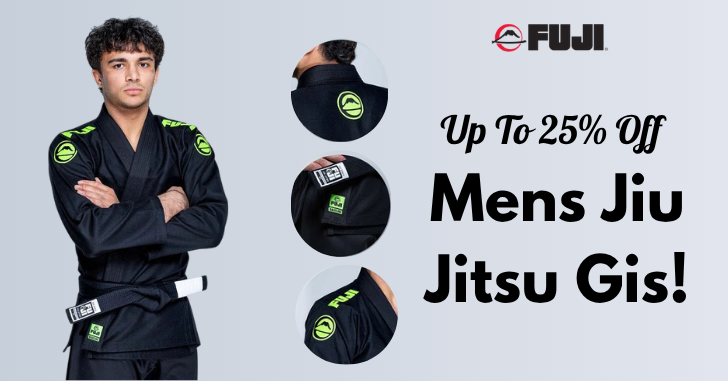
You know the feeling. You shoot for a takedown, and your gi jacket bunches up around your shoulders. You try to pass guard, and the pants ride up and bind. By the third round, you're fighting your own kit as much as your partner. If you've hit that intermediate wall where your first gi no longer keeps up, finding the best BJJ gi for training becomes less about looks and more about performance you can feel on the mat.
This guide compares four FUJI Sports gis by fit, weight, and value, so you can spend once and spend right.
Some links in this article may be affiliate links. If you buy through them, we may earn a commission at no extra cost to you.
Why Your Current Gi Might Be Holding You Back
The problem usually isn't your technique. It's the fabric wrapped around it.
A poorly cut gi restricts movement in exactly the moments you need it most. Baggy sleeves get gripped easily. Stiff, boxy jackets fight your posture in guard. And a heavy, waterlogged gi drags you down as sessions wear on.
For intermediate grapplers training three or more times a week, these small frictions add up fast. You start adjusting your game around your gear instead of the other way around.
The fix is a gi built for movement, made by people who actually train.
What Makes a Good Training Gi
Before comparing models, it helps to know what genuinely matters.
Cut and fit. An athletic, tapered cut follows your body without excess fabric. That means fewer easy grips for your opponent and cleaner movement for you.
Jacket weight. Measured in GSM, this affects durability and how the gi feels. Lighter jackets move faster; heavier ones can feel sturdier but warmer.
Pants comfort. You spend a lot of time on your back and knees. Comfortable, durable pants matter more than most beginners realize.
Build quality. Repeated washing and hard rolls test every seam. A gi from a brand that understands grappling tends to hold up better.
Judge any gi against these four points, and the noise of marketing fades quickly.
The FUJI Sports Gi Lineup, Compared
FUJI Sports has been trusted by athletes worldwide since 1969, and its gear is designed and manufactured by real grapplers. That heritage shows in how the range covers different needs and budgets.
Here are four options worth your attention.
Baseline 2.0 Slim Fit BJJ Gi $99.95
This is the value pick that doesn't feel like one.
The 350 GSM jacket keeps the build lighter, which means less bulk when you're scrambling and passing. The athletic, tapered cut is designed for movement, so the gi follows your silhouette instead of flapping around it. Soft cotton twill pants are built for repeated wear, session after session.
It also carries a clean aesthetic that works for both competition and lifestyle settings. For an intermediate grappler who wants a reliable everyday trainer without overspending, this is the natural starting point.
All Around Gi $119.95
The name says it plainly. This is the versatile, broad-use choice.
If your week mixes drilling, hard rolls, and the occasional open mat, the All Around Gi is built to adapt. It's a best-seller for a reason: it suits practitioners who want one dependable gi that handles most situations without specializing in any single one.
Available in five colors, including Blackout and Natural, it's the middle-ground option for someone who values adaptability over a specific edge.
Suparaito Gi $159.95
Step up to the Suparaito, and you move into athlete-focused territory.
FUJI positions this as a high-quality, premium-oriented gi, top-rated by athletes. It suits the committed grappler who trains often and wants gear that reflects that commitment. Available in White, Military Green, Blue, and Black, it gives you clean options for both the gym and the competition floor.
If you've outgrown your entry gi and want something that feels like a genuine upgrade, this sits in a strong sweet spot.
SEKAI 3.0 Gi $179.95
The SEKAI 3.0 is the premium series flagship and a hot new item.
This is the pick for the practitioner who wants FUJI's top-tier presentation, backed by the same heritage that world-class athletes like Victor Hugo trust. It comes in Black/Grey, White/Navy, and Blue/Yellow.
Choose this if you want the brand's premium expression and you're ready to invest in a gi you'll be proud to compete in.
Quick Comparison Table
Prices reflect what's currently shown and can change, so confirm the latest on each product page.
Pros and Cons of Buying a FUJI Gi
A balanced look before you commit.
Pros
- Heritage brand trusted since 1969, designed by real grapplers
- Range spans clear price tiers, from value to premium
- Athletic cuts designed for movement rather than boxy comfort
- Used by world-class athletes, which speaks to construction standards
- Multiple color options across most models
Cons
- No single gi is "best" for everyone; fit depends on your body type
- Premium models cost more, which may not suit casual, once-a-week training
- Exact sizing varies by person, so check the size charts before ordering
- Specific material blends beyond what's listed should be verified on the product page
Honesty here matters more than hype. Match the gi to how often you actually train.
A Simple Buying Guide
Use these checks to narrow your choice.
Match the gi to your training frequency. Train a few times a week? The Baseline 2.0 or All Around fits. Training hard and often? The Suparaito or SEKAI 3.0 rewards the investment.
Confirm your size first. Fit makes or breaks a gi. Review FUJI's size charts before buying, especially if you have a bigger build.
Decide on priorities. Want lightweight speed? Lean lighter. Want a premium competition piece? Step up the range.
Reduce the risk. FUJI Sports offers customer support and clear shipping and returns policies, which softens the pressure of ordering online.
The Bottom Line
The reason training feels harder in the wrong gi is simple: you're wrestling your gear instead of your partner. The right gi disappears into your game.
For most intermediate grapplers, the Baseline 2.0 Slim Fit is the smart value entry, while the All Around covers versatility. Ready to invest? The Suparaito and SEKAI 3.0 deliver a genuine step up.
Whichever fits your routine, match it to your training habits first. When you're ready,

Explore the full FUJI Sports gi lineup and find the one built for how you actually roll.
Frequently Asked Questions
What is the best BJJ gi for training if I'm on a budget?
The Baseline 2.0 Slim Fit at $99.95 is a strong value pick. Its 350 GSM jacket and athletic cut suit regular training without overspending, making it a sensible everyday trainer for intermediate grapplers.
Is a FUJI Sports gi worth it?
For many grapplers, yes. FUJI has been trusted since 1969, designs its gear with real grapplers, and offers gis across clear price tiers. Value depends on matching the model to your training frequency and budget.
What's the difference between the Suparaito and SEKAI 3.0 gi?
The Suparaito ($159.95) is an athlete-focused, premium-oriented gi that's top-rated by users. The SEKAI 3.0 ($179.95) is FUJI's flagship premium series, aimed at those wanting the brand's top-tier presentation for training and competition.
How should a training BJJ gi fit?
A good training gi should follow your body with an athletic, tapered cut, not hang loosely. Excess fabric gives opponents easy grips. Always check the brand's size chart before buying to confirm the right fit for your build.
Which FUJI gi is best for frequent, hard training?
For committed grapplers training often, the Suparaito or SEKAI 3.0 rewards the investment with premium construction. The Baseline 2.0 and All Around suit lighter or more casual weekly training schedules.
Does a lighter GSM gi mean lower quality?
Not at all. A 350 GSM jacket, like the Baseline 2.0's, simply means less bulk and faster movement. Lighter and heavier GIs each have advantages; the right weight depends on your comfort and training style.